
By Phodiso Modirwa
The Woman Next to the Window
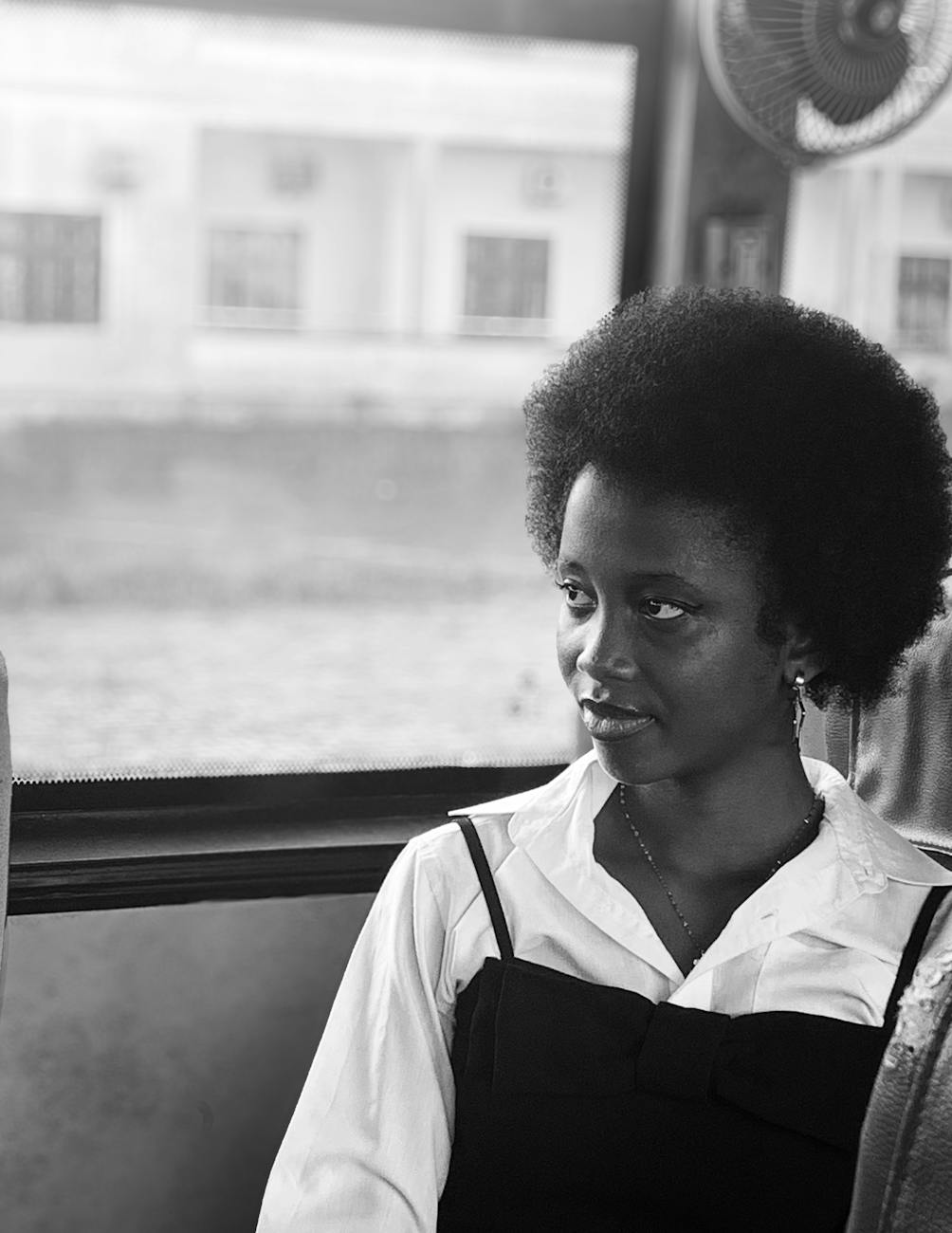
The girl sitting next to me on the bus keeps shifting in her seat. I am sandwiched between her and the window and with every few minutes, I have to relinquish an inch of my space and let her claim it. If it were any other day I would have said something by now but I am lost somewhere in my mind, preoccupied with which one of my mother’s remedies I am going to try first. Under my chair are three small flower pots with cactus plants I took from her; in my bag, a notebook I stealthily wrote in when she was not looking. You know to return to your mother when the cardinals start looking wonky, so I went home, some 300km away from the city I don’t know how to leave, to go lie on my mother’s couch, on her living room carpet, on her bed, and just weep—the kind of weeping that feels like purging. I could not point to the root of my ache but I knew I was lost. I watched mama all day making me food I could not eat and doing her best not to lose her patience. She made me Joko tea—which I at least did drink with her— and washed my back like I was seven again. When the year had begun, I had started feeling a kind of coming down that was more than just a festive season hangover. My appetite oscillated between rummaging through everything in the fridge one day and putting nothing in my mouth the next. I took walks, only to come back exhausted for the day, rising to take a night shower and thanking myself for it because it really felt like I had won a battle. Getting up to cook or clean the house, opening the windows and dusting the window sills, opening my laptop to send an email or call a friend; all these tasks felt insurmountable before me. So I got on the bus to go tell my mother I did not know how to lift the heaviness off. It is funny because I remember desiring to be twenty-five, thinking I would be so independent, so fulfilled with a vibrant life—a brilliant career, a chorus of friends and deep well of wisdom, but here I am, still feeling clueless and empty at twenty-seven. I am five years graduated with an Engineering Degree and nothing to show for it. The friends I thought I had made, I see them on overseas trips together without me and though I wish to find fault with them, I know I could never afford it anyway so I just keep telling myself, what is mine will find me. Right now, I am now on my way back to the city, back to my house—a one bedroom-cum-living room-cum kitchen, my resolve a flicker of naked flame in the wind. Although it is not much, I am independent. I am a woman now, outside of my mother’s house. I should know how to keep it together, how to make something useful of myself and not make a show of my flailing, my aimless wading in the waves of life. I will do my best, if this woman next to me doesn’t send my efforts tumbling down the aisle of this bus, like the mangoes atop this wonderful lady in white garments’ head.
***
The Woman Sitting on the Aisle Seat
I am trying to feel something. Someone? To not feel like I am slipping away from myself. The last time I was in a bus like this I was going to attend my sister Lelo’s funeral, all those nine years ago. When I got to her house, where the funeral was held, everything was a blur around me; the people, the ceremonies, her husband looking ghostly, like a haunted house, everyone frantic and milling around me like I was not even there. They were right to. I too was afraid I would break, so I busied myself with the choreography of mourning without walking into the heart of it. I served tea, made diphaphatha, and bathed everyone’s kid in the one big zinc tub. I was a whirlwind of frantically moving hands and a racing mind; I was not there. My sister and I were two peas in a pod, Irish twins born just eleven months apart. We graduated the same year and decided, while trying to find jobs, we would rent a bachelor pad together in Gabane, just a kombi ride to Gaborone in case either of us needed to attend an interview there. When either one of us found a boyfriend, we promised each other that we would never let that take away from our bond. If a man demanded more than we felt our sisterhood could sacrifice, we both decided to leave him. We were twenty-three and twenty-four then, we thought we had our whole lives in front of us but now I have been left to rattle alone in this pod, afraid to get out lest what took her takes me, too. When Lelo married a man so far from the city, Themba, we promised we would call every day and we did, for a time. When the calls became texts, we adapted and it worked, for a time. When the texts became sporadic I knew something was wrong, but she would not admit it. She’d sometimes call me in the middle of the night and not speak much, just let out a sigh and ask me to stay on the line for a while, until she can sleep. When she visited me in the city, her laughter hollow and distant, she let slip that Themba had these bouts of anger that resulted in him breaking things in the house. When I lifted my eyes to look at her, she pulled a veil of half-smiles and silence lower to cover her face. I knew she too was a thing in that house. So I made a fuss, told her she could leave, we could rebuild together and it would be like the old times. I could ask Setso to move out from the one-room we shared so we could be a bit more comfortable, but she said to me, a woman does not leave her home, she fixes it. And then one day I received that one call we all dread. How she answered death’s call, only God and Themba know. I came to visit her grave as I do at the beginning of every year, and I cannot help but feel lost, thirty-four and still missing a part of me, still walking around with a lump on my throat. I keep going back to her grave to see if this year the fear will loosen so I can say yes to Setso who has been asking for years. I hope this is the year I get to give myself a chance. The lady next to me ignores my shuffling on my seat, though my elbow brushes against hers every so often, and my wig catches on her locs. She is wearing low-cut light blue jeans and a frilly purple satin top that has water marks around her bosom area, just like my t-shirt. Maybe we have both had a teary morning, or maybe we are just messy eaters. Whatever it is, I want her to know I am here. Even if we never speak, even if we never see each other again.
***
The Lady Standing in the Aisle
I am a woman who moves with her shop open because school uniform, food, transport money to the hospital to see my husband, rent and this and this and that do not say, oh, she needs a break, she has to go be with family. I wish someone could have pity upon me and let me take their seat, rest my tired feet. The mangoes on my head are heavy but the aisle is too small for me to hold them in front of my body. The city is far but I had to come home for the yearly ceremony to cleanse the yard and myself. I left my children this time because school started early, but I had to take the mangoes in case they might sell. I wonder whether God hears us when we pray, all the all-night dancing we do, throwing our bodies to the ground, wailing, splashing holy water on our rooftops and still going back to our lives as usual. What is the point? My life feels heavy, like it is sitting on me, day in, day out. I must tend to my vows and water to my withering hope that one day we will have our own home where we don’t have to pack ourselves like sardines in the can of our one bedroom-cum living room-cum kitchen house. When the bus arrives in the city, I will walk the thirty minutes home because I have to save this twenty-one pula from the three mangoes I sold on this bus for a rainy day, which is usually every other day. But I am not complaining. I have a family I can call mine, I have a name, Grace Chivuro, no longer Moyo because I said I do, but I still get to work towards something. Myself.
***
All
We return to the familiar places that ground us, to a mother’s bed, a sister’s grave or a family home. We trust the compass of our conscience to point us to safety and whatever road we take, we arrive, we unfold to behold—sometimes for the first time—our scars, how perfectly they have healed, our new wounds, how stealthily they have festered. And when we walk back to our mundane days, we are all but a mosaic of selves seeking actualization, our needs thrumming us forward, the light of what makes us true always burning a few turns ahead. We are unfinished, and may never be; we hope to meet kindred spirits and so be a mightier thing before what haunts us. We hope when we too leave, someone will meet our own with this kindness, will place a flower atop our graves every year or nine, will remember they once sat next to us on a bus, or bought something ripe and sweet from our hands. We hold our heads up high, counting the months until we have to return this way again, to the landmarks that recalibrate us to sanity.
Phodiso Modirwa is a Motswana writer and poet with works appearing in adda Magazine, Guernica Magazine, Brittle Paper Magazine and elsewhere. She is a fellow of and Writer in Residence for the International Writing Program(’24). Her chapbook, Speaking in Code is published by Akashic Books as part of the New Generation African Poets Box Set. Her debut poetry collection, Crossing Roads, tackles themes of womanhood, growth and transitions through the lens of Setswana culture.

 Petlwana Journal of Creative Literature and the Arts
Leave a comment