
By Godfrey Sephala Kalanke
It is after midnight and several hours have passed since the ordeal, but I am still very angry at Mike the mechanic.
Of late I have come to feel like I am just letting people do as they wish with me and my property. My late uncle once got very irritated with this kind of attitude when one of my cousins left me stranded at home while he drove away with my car to Gaborone.
“If you are not careful, with that kind of mentality, some unscrupulous men are going to take even your wife away from you one day,’’ my uncle warned me.
And today I found myself stranded without a car once again, because Mike, the dishonest mechanic, swapped my new gear box for an old one and therefore my car can’t change gears smoothly as it is supposed to. I wanted to take him to court, but everyone knows about the lengthy and neverending court appearances one has to endure before any case is resolved.
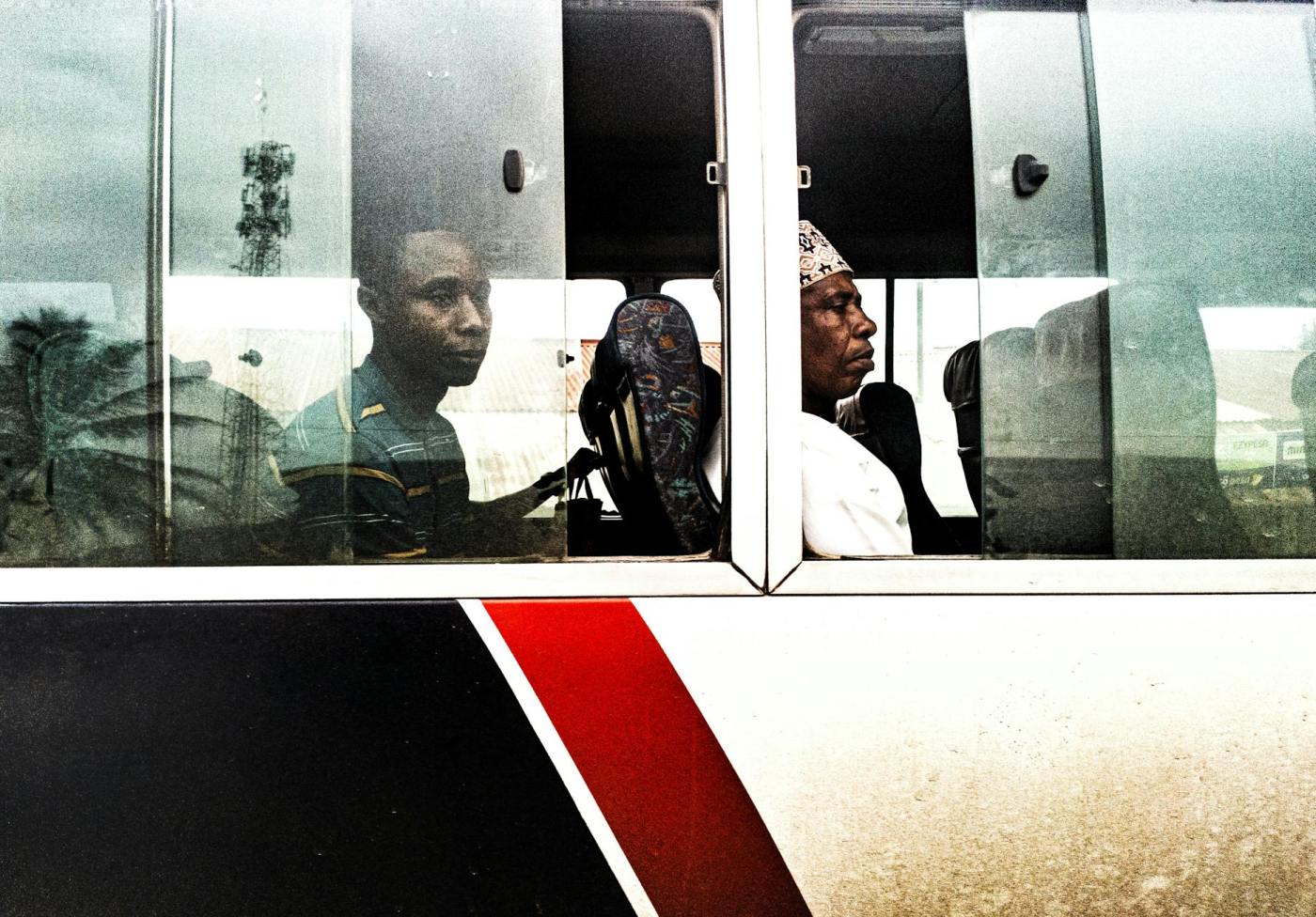
Feeling helpless, I decided to take public transport to the village where I am currently residing. Well, little did I know that I was headed for a dramatic experience! The last time I had used a bus with my village folks must have been more than twenty years ago.
I got into an already full bus in a frazzled state of mind and managed to squeeze myself between an old lady and some youthful school boys at the back seat. The moment I had sat down, and to my utter shock, the old lady shoved a water bottle containing very cold water into my face.
“Hold this for me, I want to search for my purse in the bag,” she muttered. She did not give me a chance to think about what she was saying, let alone respond, and simply dropped the water bottle on my lap.
I sighed.
As if that was not enough, and as though we had long known each other, the old lady began an unsolicited conversation: “Yesterday a car overturned and then rolled into Kolobeng River and it was by sheer luck that the driver survived.”
She continued searching in the bag, oblivious of my confused look and only concerned that she might not find her precious purse. When it was taking too long for her to locate the purse, she started removing her things from the big bag and handing them over to me, one item at a time. I was left mystified, to say the least. She continued handing out more and more things to me as she reached deeper and deeper into her bag.
“You know the way these young boys drive, I wonder whether they will ever reach old age,” the old lady continued. “It looks like they are all headed for early graves!”
Because I was not responding to what she was saying, she raised her eyes to see whether I was paying attention. I reacted by nodding my head as if to agree with her, and also gave a false smile. I further mumbled something like, “These kids,” and this seemed to convince her that we were on the same page!
Upon finding her purse, after what seemed like ages, she changed the subject abruptly.
“How does a child steal his own grandmother’s money from the house? Tell me!” she enquired with wide eyes.
As she once again fixed her gaze on me, I looked at her, no doubt with a puzzled expression. I found myself mimicking my previous absentminded answer. “These kids.” Surprisingly, it did the trick again!
She went on to tell me, in unnecessary detail, how that morning the senior citizens of the village had received their Government Old Age Pension Allowances and a boy had stealthily entered his grandmother’s locked bedroom. The wayward child had then gone straight to the mattress under which his granny usually hid her money.
“What do you think of this shameful act?” my fellow traveller asked me with a poignant look.
I realised I could not give my usual “these kids” answer, so I changed it to, “It’s bad!”
“Yaa, it’s bad indeed,” she agreed. “These kids are all going to hell, I tell you!”
The bus drove on along the city roads. When I next checked on her, the old lady was dozing off. I sighed with relief, thinking I would have some peace and quiet now, but alas! The young boys who sat on my right side immediately started a conversation at the tops of their voices!
“I went to collect the reference from my former school and came back empty handed because I could not find the right teachers,” one of them was saying. “I only found Ms Mofario and you know that she cannot write a good reference for me. The Security Company said they can only employ me if I bring a good reference, you know!”
“No, she can’t,” replied the other friend. “That one is a problem herself. I never attended even a single lesson of hers throughout my stay at school. She thought she was the school Principal. I failed her subject and I don’t give a damn about it!” he concluded in a boastful tone.
Then a phone rang from another end of the bus. I didn’t know who to listen to. The guy on the cellphone started shouting for everyone in the bus to hear!
“My friend, I think I should just relocate to the village. I cannot afford to pay P800 rentals for that small room. No, I can’t!” I could not hear what the person on the other end was saying but just as quickly, he bemoaned his situation again. “I have bricks lying at my plot in the village and I think I can afford to build a two-roomed house for myself and relocate. Otherwise this city accommodation is going to make us poor. I need my own house!” he cried out, and then put down the phone.
It occurred to me that this trip was becoming like a community meeting, where I was catching up on all the trials and tribulations of my fellow villagers. Driving daily meant my interactions with the general public were normally kept to a minimum. Now, as I heard all these different conversations, I was coming to a startling realization – I was out of touch! I had barely found time to settle down and process this discovery when a heated discussion erupted some few seats away.
“I am not voting this year, I tell you! These guys are just taking us for granted,” groaned a stout man, who kept wiping the sweat from his face with the palm of his hand.
“Me too,” his friend replied. “These guys are all the same. Both the ruling party and the opposition are the same. They just want to eat.”
“The difference between the ruling BDP and the opposition BCP is only the ‘D’ and ‘C’ in the middle of their names, otherwise they just stand for the same thing,” the stout man added. “We do not have jobs, our children do not have jobs and they want us to create jobs for them,” he lamented.
Just then a woman’s voice came from nowhere. “But you will be denying yourself the right to choose the Government of your choice if you do not vote,” she squeaked in the middle of the men’s conversation. “In other countries, people have sacrificed their lives in order to vote and in Botswana you are taking voting for granted!”
“Woman, I am not voting, do you hear me?” the stout man stated with finality, as the bus veered out from the busy city traffic.
I could barely hear the argument that ensued from there, as the man and woman were shouting over each other. Other passengers also jumped in until it sounded like a screaming contest. It was only when the equally rowdy bus conductor called for calm that the noise died down.
But the theatre of life went on! Not long after this chaotic incident, someone on the bus decided to start munching a stale pie with lots of chillies. Apart from the smell, which nearly made me vomit, the chillies filled the air until many passengers were coughing. By the time the powerful scent reached my nostrils, the whole bus was in an uproar.
“I bought this pie with my hard-earned cash,” the guilty party protested when the other passengers asked her to put the food away. “Do you want me to starve?”
Once again the bus conductor tried to intervene but the hungry woman continued devouring her pie, disregarding everyone’s complaints and safety. How she could even eat such hot chillies without gasping for air was a mystery!
The bus drove on with some people chatting, some chewing, whilst others dozed off. I thought of my car at the garage and remembered my uncle’s sour words of warning: “With that kind of mentality, some unscrupulous men are going to take even your wife away from you one day.” I pondered over these words for the rest of the journey, and also reflected on the travails of my fellow passengers. We all had our daily struggles and were trying our best to cope.
We arrived in the village very late in the evening. I was startled at the last bus stop when the bus conductor pounced on one feeble old man.
“Hayi, monnamogolo! Are you trying to cheat me? There’s no son of yours here to pay the balance!” the bus conductor complained.
The old man had partly paid the fare and had promised that the remaining amount was to be paid by his son on arrival. Yet when the bus pulled up at the stop, there was no one in sight.
“I am sorry, but he promised he would wait for me here,” the poor elderly man said. “Let me try to call him…”
The bus conductor would have none of it and started to manhandle the elderly gentleman, trying to check his pockets for cash. The whole bus protested loudly at this shocking behaviour. Troubled by the incident and worried that things would escalate further, I produced my last P20 to remedy the situation.
“I’ll pay for him!” I shouted over the ruckus. “Please, this is not how we treat our elders.”
After thanking me profusely, the old man staggered out of the bus with fright still written all over his face.
Exhausted and traumatised by the day’s events, I went straight home to sleep.
Yet here I am still tossing and turning! My body may be tired but my mind is full of all those pertinent issues and frustrations affecting my village folks and the poorer members of our society. It strikes me that perhaps we should be doing more to maintain our community spirit. It’s a tragedy that there are unscrupulous folks like Mike the mechanic, the heartless bus conductor and the boy who robbed his grandmother. Surely we can do better. I must admit, I can probably do better, as well.
I tell you, I do not wish to see myself get stranded without my car again… but I will always be grateful for that bus ride.
Godfrey Sephala Kalanke is currently working for the Ministry of Trade and Industry as Manager- Facilities Management. Previously he worked for the Ministry of Education as secondary school teacher of English Language and Literature. He rose through the ranks to become Chief Education Officer and later Private Secretary to Minister. He is a published author, having just released a personal memoir entitled The Domestic Worker’s Son.

 Petlwana Journal of Creative Literature and the Arts
Leave a comment